
School of Sciences
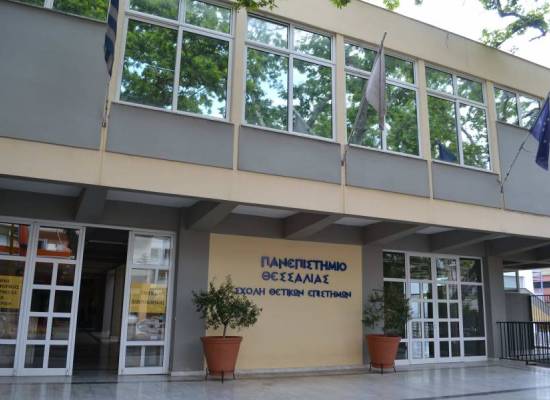
The school of Sciences of the University of Thessaly was founded according to the Presidential Decree 92/2013 (Government Gazette 131/issue Α’ /5-6-2013). It is based in Lamia and is housed in the buildings of the former Pedagogical Academy, as well as in the facilities of the former Technological Educational Institution (T.E.I) of Sterea Ellada (Central Greece). The school of sciences comprises the following Departments:
• The Department of Computer Science and Biomedical Informatics
Since its foundation, incessant purpose of the Department of Computer Science and Biomedical Informatics is the provision of knowledge of Computer Science to students. Computer science comprises a longstanding scientific field which includes the collection, storage, processing and transmission of information and design, implementation and optimisation of information systems, using the PC as basic tool.
Moreover, students acquire expert knowledge in the fields of both Information systems in Medicine and Health Care and Biomedical Engineering and Bioinformatics. The constant progress in Computer Science and biomedical applications, increases the demand of specialized academic staff not only at a national level but also globally.
The Department of Computer Science and Biomedical Informatics, besides the above mentioned referring to Computer Science, differs among others as the unique offering a specialized curriculum to Computer Science on Biomedical Engineering and Bioinformatics. The Departments’ graduates will be the only scientists having such specialization and they will contribute with their expertise to these scientific fields.
• The Department of Informatics and Telecommunications
The Department of Informatics and Telecommunications has a longstanding mission to promote the science and technologies of Informatics and Telecommunications, and to prepare, through teaching and research, scientists equipped with all the necessary ethical and technological skills that will enable them to successfully participate in postgraduate study programs, support the design and implementation of Informatics and Telecommunications projects, and keep pace with developments in these constantly evolving fields.
At the same time, students are offered the opportunity to enroll in courses related to management, entrepreneurship, and pedagogy, with the aim of acquiring knowledge that is particularly valuable in the labor market.
An Undergraduate Study Program (USP) in Informatics and Telecommunications is absolutely essential for current and future economic development, for the digital transition, and for addressing the significant shortage of graduates in technological specialties.
It is well known that the sectors with particularly high demand in the economy include the following:
• Information and Communication Technologies (ICT): e.g., software, network infrastructure, computing systems, telecommunications services
• Digital transformation: e.g., both the public and private sectors are continuously moving toward digital solutions (such as digital governance, electronic services, cloud technologies, and big data)
• Artificial intelligence, machine learning, data science, and the Internet of Things (IoT)
• Embedded and cyber-physical systems, as well as robotics
• Systems and network security: due to the increase in cyberattacks and the growing need for data protection
• Telecommunications: e.g., 4G and 5G networks, high-speed communications (such as optical networks)
• Digital content, multimedia and applications, e-commerce, and mobile applications.
• The Department of Mathematics
Τhe Department of Mathematics of the University of Thessaly was established by Article 22 of Law 4589/29-01-2019. Based in Lamia, it is a constituent Department of the School of Sciences, welcoming its first cohort of students at the commencement of the 2019-2020 academic year.
The mission of the Department of Mathematics is to cultivate and advance mathematical thinking, as well as to provide rigorous training for scientists across all branches of mathematical sciences. Aligning with contemporary developments, its curricula, on one hand, cultivate and are anchored in the core disciplines of Mathematical Sciences- Mathematical Analysis, Algebra, Geometry, and Probability Theory and Statistics-while, on the other hand, place a strong emphasis on interdisciplinary pathways and the mathematical foundations of Scientific Computing, Machine Learning and Artificial Intelligence, Mathematical Biology and Biomedical Applications, Mathematical Physics, and the Dynamics of Complex Systems.
This strategic choice for a modern education in Mathematics is reflected in the extensive variety of courses offered in the Undergraduate Program of Studies, as well as in the newly established, dynamic Postgraduate Program of Studies (M.Sc.) entitled "Applied Mathematics and Machine Learning," which commenced its operation in the 2025-2026 academic year.
The faculty and research staff comprise scientists active across the entire spectrum of Mathematical Sciences. Since its very first years of operation, the Department has been a hub for doctoral research, attracting a significant number of Ph.D. candidates. Concurrently, the Department’s "Mathematical Sciences Research Laboratory" consists of a notable number of postdoctoral researchers and scientific associates. The Department maintains an active and institutionalized Departmental Seminar, while significant scientific events have been organized and co-organized under its auspices.
The vision of the Department of Mathematics of the University of Thessaly is to produce graduates who are not only highly qualified scientists regarding contemporary topics and the multifaceted applications of their science, but also socially aware citizens, fully equipped to meet the demands of the modern labor market with a particular emphasis on leveraging new technologies.
• The Department of Physics
The Department of Physics of the University of Thessaly was established in 2019 and is located in the city of Lamia. It is part of the School of Sciences of the University of Thessaly.
The first students were admitted in September of 2019.
The Curriculum aims to enable the Physics Department graduates to follow a future professional path based on their specific interests and talents. It also aims to provide the necessary knowledge for its graduates to work in evolving disciplines in the international scientific field, which, in addition, are of particular technological interest. There are four areas offering specializations in:
- Theoretical Physics and Astrophysics
- Nuclear Physics, Particle Physics, and Physics of Plasma
- Condensed Matter Physics
- Applied Physics-Electronic Physics
The aforementioned are cutting-edge areas and in combination with appropriate postgraduate studies can provide employment opportunities in a variety of fields (Astrophysics, Nuclear Physics, Elementary Particle Physics, Physics of Plasma, Space Physics, Telecommunications, , Simulation of Physical Phenomena, Computational Science, Quantum Computing, Lasers, Materials Science ), in research centers in Greece and abroad, international organizations, state-of-the-art technology companies, start-ups and more.
Furthermore, the curriculum is designed in a way to promote partnerships with other Departments of the University as well as institutions and organizations both in Greece and abroad (i.e. CERN or other International Educational and Research Institutions). The Department has already established such educational and research collaborations through MOUs.
In addition to the above study areas, the curriculum is also designed in a way to allow graduates to acquire the necessary competences, thus, preparing those who wish to enter the employment market upon graduation.
Besides the scientific knowledge, the curriculum offers graduates the opportunity to develop a series of skills such as:
- Ability to analyze data and detect the most important parameters
- Ability to investigate quantitative relationships between the parameters of a given problem/case study
- Familiarity with the use of advanced mathematical and computational tools
- Ability to present their results to a scientific and general audience
- Familiarity with the use of ICT in research and teaching of Natural Sciences
- Familiarity with team work and collaboration
The School of Sciences became autonomous and elected its Dean according to the law 4521/2018, and is governed by a) the Dean, b) the Deanery and c) the General Assembly.